

Balance is something most of us rarely think about until it starts to change. As we grow older, maintaining balance becomes increasingly important for staying active, confident, and independent. While changes in balance are a natural part of aging, understanding why they happen can help us take simple, effective steps to support stability in everyday life.
How Balance Works in the Body
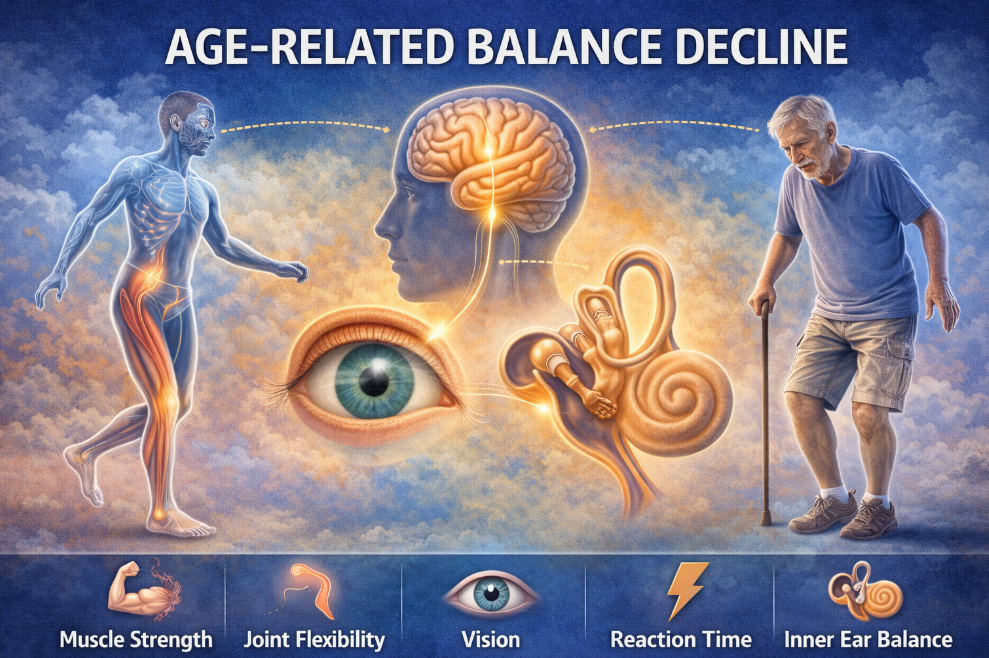
Balance is not controlled by a single system. It relies on the coordination of muscles, joints, vision, the inner ear (vestibular system), and the nervous system. These systems constantly communicate to help the body remain upright, adjust posture, and respond to movement.
As we age, this coordination can become less efficient. Even small changes across multiple systems can affect overall stability.
Why Balance Declines as We Age
Research from organisations such as the Centers for Disease Control and Prevention (CDC) and National Institute on Aging (NIA) highlights several factors that contribute to balance decline:
-
- Reduced muscle strength, particularly in the legs and core
-
- Increased joint stiffness, limiting smooth movement
-
- Changes in vision, affecting depth perception and contrast
-
- Inner ear changes, reducing sensitivity to motion and position
-
- Slower reaction time, making it harder to recover from a slip
These changes usually develop gradually, which is why balance problems may go unnoticed until a stumble or near fall occurs.
How Balance Changes Affect Daily Life
Even minor balance difficulties can impact daily routines. Activities such as walking on uneven surfaces, climbing stairs, or standing up from a chair may feel less secure. Over time, fear of falling may lead to reduced physical activity, which can further weaken muscles and reduce confidence.
According to the CDC, falls are a leading cause of injury among older adults, making balance maintenance a key part of healthy aging.
Simple Ways to Improve Balance Daily
The good news is that balance can be improved at almost any age. Studies referenced by Harvard Health Publishing show that regular, gentle movement can significantly support balance and coordination.
Simple daily practices include:
-
- Standing on one foot while holding a chair or wall
-
- Slow, mindful walking with attention to posture
-
- Sitting down and standing up from a chair without using hands
-
- Gentle stretching to maintain flexibility
-
- Light strength exercises for legs and core muscles
Consistency is more important than intensity. Even a few minutes each day can be beneficial.
Lifestyle Habits That Support Stability
Balance is influenced by everyday habits, not just exercise:
-
- Adequate sleep supports coordination and reaction time
-
- Proper hydration helps reduce dizziness and light-headedness
-
- Good lighting at home improves visual awareness
-
- Supportive footwear enhances grip and stability
-
- Reducing long sitting periods keeps muscles engaged
These small adjustments can collectively make a noticeable difference.
When to Seek Professional Guidance
If you experience frequent dizziness, unsteadiness, or falls, it is important to consult a qualified healthcare professional. They can assess underlying causes and recommend appropriate support, such as physical therapy or balance training.
Final Thoughts
Balance changes are a normal part of aging, but they do not have to limit independence or confidence. With regular movement, supportive daily habits, and awareness, balance can be maintained and even improved over time. Small, consistent efforts often have the greatest long-term impact.
This article is for informational purposes only and does not replace professional medical advice.
References
-
- Centers for Disease Control and Prevention (CDC) – Older Adult Falls & Mobility
-
- National Institute on Aging (NIA) – Balance Problems and Disorders
-
- Harvard Health Publishing – Balance, Strength, and Fall Prevention
-
- National Institutes of Health (NIH) – Age-Related Changes in Balance and Mobility