

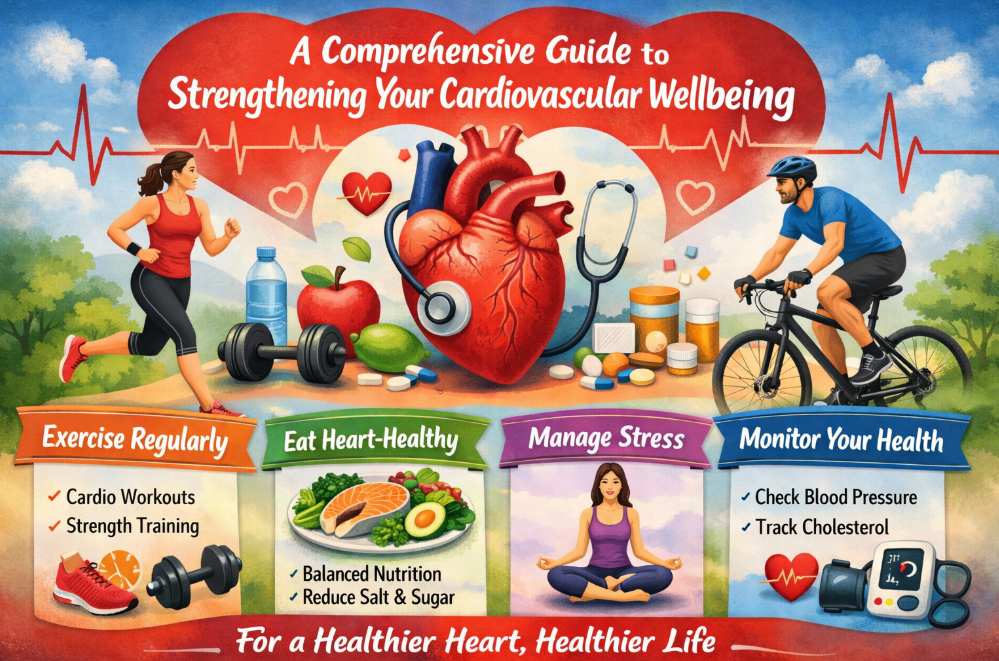
Our hearts work every second of our lives quietly powering the flow of blood, oxygen, and nutrients that keep us moving, thinking, and feeling. Because of this constant demand, understanding how to support cardiac health through everyday choices can make a meaningful difference across the years. Heart disease remains the leading cause of death in the United States, affecting millions of people and highlighting the importance of daily habits that support a healthy cardiovascular system. CDC
Heart health is not about a single action or quick fix. Rather, it is a collection of routines, small decisions, and lifestyle patterns that accumulate over time to shape long-term wellbeing. In this guide, we will look at diet, physical activity, weight management, stress, routine screenings, and other lifestyle approaches that experts consistently identify as foundational for keeping your heart functioning well.
Understanding Cardiovascular Health
When experts talk about “cardiac” or “heart” health, they are referring to the wellbeing of the heart and the network of blood vessels that support it. Conditions related to the heart and circulatory system are grouped together as cardiovascular disease (CVD), a category that includes heart attacks, strokes, and conditions like coronary artery disease. These conditions often share common risk factors such as high blood pressure, elevated cholesterol levels, smoking, poor dietary patterns, and physical inactivity. Cardiac Health
Understanding these risk factors helps guide prevention strategies. For example, when someone learns that regular physical activity helps maintain healthy blood sugar and blood pressure, it becomes easier to see why walking, cycling, or other movement patterns are recommended.
Diet and Heart Health: The Everyday Foundation
You are what you eat in many ways, your dietary patterns directly affect your heart. A growing body of evidence from public health authorities like the American Heart Association stresses the importance of overall dietary patterns that emphasize whole foods rather than individual “miracle” items. www.heart.org
A heart healthy diet includes a variety of fruits and vegetables, whole grains, lean proteins, plant-based proteins, healthy fats, and minimal added sugars, salt, and processed foods. It is not prescriptive in terms of rigid meal plans, but rather encourages patterns that prioritise nutrient-rich foods while limiting elements that contribute to elevated blood pressure or cholesterol. www.heart.org
For example, consuming foods rich in fiber (such as vegetables and whole grains) and moderate amounts of unsaturated fats (such as olive oil, nuts, and seeds) supports overall metabolic processes that influence lipid profiles. Limiting saturated fats, trans fats, and excessive sodium helps keep blood pressure and cholesterol within healthier ranges. www.heart.org
It is also worth noting that meal timing and portion sizes matter. Large, calorie-dense meals can place a temporary strain on the cardiovascular system, particularly in individuals with existing health conditions. Awareness of balanced portions and mindful eating supports both heart health and weight management another key component discussed below.
Physical Activity: Moving for Your Heart
Physical activity is a cornerstone of cardiovascular wellbeing. Government health guidelines recommend that adults aim for at least 150 minutes of moderate-intensity activity per week, or 75 minutes of vigorous activity, along with muscle-strengthening exercises at least twice weekly. USPSTF
Moderate-intensity activity can include brisk walking or cycling, while vigorous activity might include more demanding movements such as running or swimming laps. The important point is not perfection, it is consistency. Whether it is a 30 minute walk daily or shorter bouts scattered throughout your day, any movement that elevates your heart rate counts toward cardiovascular benefit. USPSTF
Emerging research also suggests that even brief bursts of higher intensity activity, such as climbing stairs or brisk walking for a few minutes, can contribute positively when integrated into daily routines. Such “incidental activity” may not replace structured exercise, but it adds up and supports overall metabolic health. Verywell Health
Beyond formal workouts, physical activity helps with weight management, improves blood sugar control, and supports normal blood pressure levels, three interlinked factors that influence long-term cardiac outcomes. CDC
Weight Management and Heart Risk
Carrying excess weight places additional demands on the heart and is linked to elevated risk factors for cardiovascular disease, including high blood pressure and dysregulated cholesterol levels. Even modest weight loss, around 5 to 10% of body weight, can yield improvements in blood lipids, blood pressure, and blood sugar control. American College of Cardiology
Rather than focusing solely on the number on a scale, consider a broad view of body composition and routine habits. Combining physical activity with balanced eating can improve cardiorespiratory fitness over time, independent of weight loss alone. In this way, healthier patterns benefit the heart directly and indirectly by supporting other systems such as glucose regulation and vascular function. American College of Cardiology
Blood Pressure and Cholesterol: Numbers That Matter
High blood pressure and elevated LDL cholesterol (often referred to as “bad” cholesterol) are two of the most common measurable risk factors for heart disease. Regular monitoring of these numbers allows for informed decisions about lifestyle, diet, and, when appropriate, medical management. Public health agencies emphasise routine screening as a way to identify risks early and respond before issues escalate. CDC
Lifestyle strategies such as reducing sodium intake, increasing physical activity, and eating a nutrient-rich diet contribute to maintaining these values within a healthier range. Avoiding smoking and limiting alcohol also supports healthy blood pressure levels. CDC
Stress, Sleep, and Heart Health
Stress is not just a feeling it triggers physiological responses such as increased heart rate and hormone releases that, if persistent, can influence how the body regulates blood pressure and inflammation. Chronic stress management through practices like mindfulness, controlled breathing, hobbies, or supportive social routines can be part of a heart supportive lifestyle.
Moreover, sufficient quality sleep is increasingly recognised as important for overall metabolic and cardiovascular health. Poor sleep patterns are associated with higher risks of hypertension and glucose dysregulation, both of which are linked to heart disease.
Smoking Cessation: A Vital Step
Smoking and exposure to secondhand smoke remain significant risk factors for cardiovascular disease. Tobacco smoke introduces substances into the bloodstream that can damage the inner lining of arteries, raise blood pressure, and lower beneficial cholesterol levels. Eliminating smoking and avoiding smoke exposure are among the most effective lifestyle changes for long-term heart health. CDC
Routine Health Screenings and Awareness
Routine checkups with a healthcare provider allow for early detection of risk factors such as high blood pressure, elevated cholesterol, and diabetes. In the United States, guidelines emphasise periodic screening for adults, especially as age increases and risk accumulates.
Knowing your blood pressure, cholesterol levels, blood glucose, and body mass index (BMI) provides baseline information that supports informed discussions with a professional about lifestyle strategies and, when needed, clinical interventions.
Putting It All Together: Daily Heart-Healthy Habits
Maintaining heart health can feel overwhelming if viewed as a long list of requirements. Instead, many find it helpful to focus on attainable habits that, over time, become part of their everyday routines. Below are widely supported approaches based on public health guidance:
-
- Strive for regular physical activity, aiming for at least 150 minutes weekly. USPSTF
-
- Choose a balanced, nutrient-rich diet prioritising fruits, vegetables, whole grains, lean proteins, and healthy fats while limiting added sugars and sodium. www.heart.org
-
- Avoid smoking and limit alcohol intake. CDC
-
- Keep routine health screenings and know your key cardiovascular health numbers.
-
- Prioritise restful sleep and effective stress management.
These habits, pursued consistently, reflect a holistic approach to wellbeing that supports the heart and overall health over the long term.
When to Talk to a Professional
This guide is intended as general information and should not be interpreted as medical advice. Individuals with personal or family histories of cardiovascular conditions, or those experiencing symptoms such as persistent chest discomfort, shortness of breath, or unusual fatigue during activity, are encouraged to discuss these with a qualified healthcare provider as part of personalised care.
Summary
Heart health is shaped by patterns of daily choices, what we eat, how much we move, how we manage stress, and how we attend to routine screenings. Evidence-based guidance from public health authorities highlights a heart-healthy dietary pattern, regular physical activity, and avoidance of high-risk behaviours as foundational. By focusing on sustainable, consistent steps, individuals can support their cardiovascular wellbeing throughout adulthood and beyond, enhancing quality of life and overall wellness.
References:
-
- U.S. Centres for Disease Control and Prevention – Heart Disease Prevention Guidance CDC
-
- American Heart Association Diet and Lifestyle Recommendations www.heart.org
-
- Cardiac Health Foundation Diet and Exercise Overview Cardiac Health
-
- U.S. Preventive Services Task Force Physical Activity and Diet Guidelines USPSTF