

Most people notice arthritis only when it interrupts their routine. A knee that hesitates before standing. Fingers that resist movement on a cold morning. A shoulder that once felt effortless now asks for patience. These moments often arrive quietly, without warning, and they rarely announce themselves as arthritis at first.
Arthritis is not a sudden condition. It develops through small biological changes that accumulate over the years. Understanding those changes allows people to respond earlier, manage symptoms better, and protect mobility far longer than they expect.
Joints Are Living Systems, Not Mechanical Parts
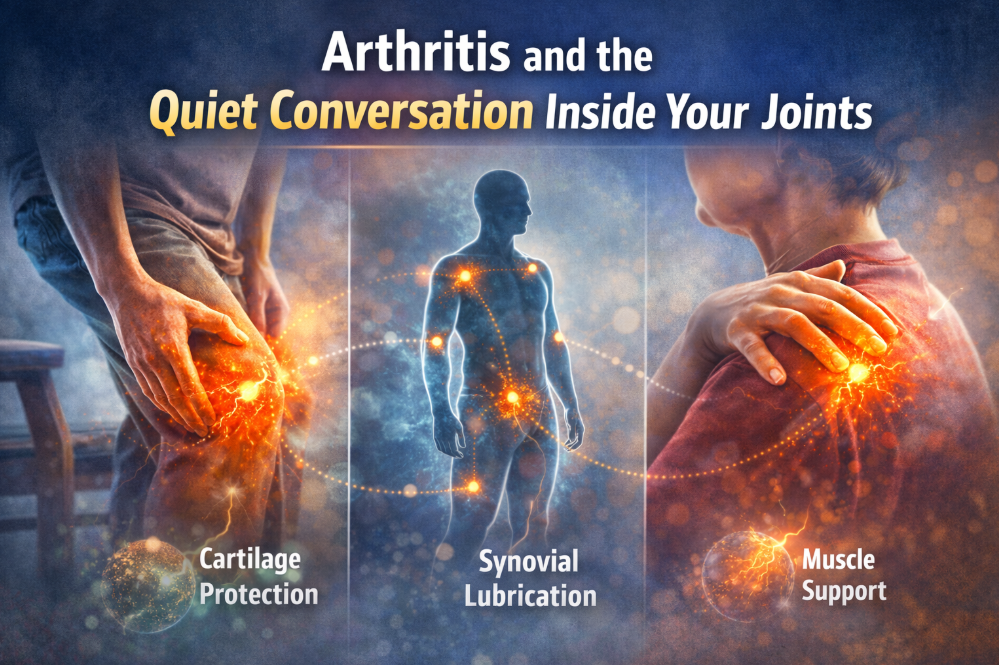
Joints are often compared to hinges or bearings, but that comparison misses an important truth. A joint is a living system. It responds to movement, nutrition, rest, hormones, and inflammation signals from the entire body.
Inside a healthy joint, cartilage absorbs shock and distributes pressure. Synovial fluid nourishes tissue and reduces friction. Surrounding muscles guide movement and stabilize the structure. When arthritis develops, the problem is rarely isolated to one component. It is usually the result of a communication breakdown between tissues.
Medical researchers frequently describe arthritis as a condition of imbalance rather than simple damage.
Why Arthritis Develops Over Time
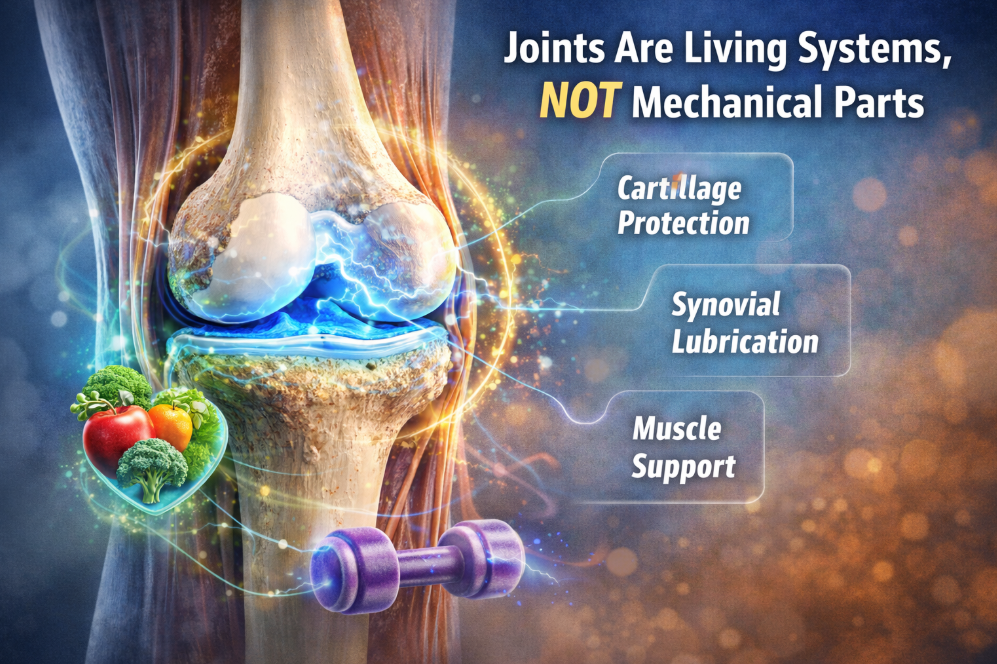
Arthritis rarely has a single cause. It emerges when the body struggles to maintain repair faster than wear.
Repeated Micro Stress
Daily movements shape joint health. Sitting for long hours, repetitive work, poor posture, and uneven muscle strength slowly alter how force travels through joints. Over time, this creates microscopic stress that cartilage struggles to repair.
Inflammation That Does Not Switch Off
Inflammation is meant to be temporary. When stress, poor sleep, nutritional imbalance, or immune dysfunction keep inflammation active, joint tissues remain in a constant state of irritation. This slows healing and accelerates degeneration.
Immune System Miscommunication
In autoimmune related arthritis, the immune system mistakes joint tissue as a threat. Instead of repairing damage, it amplifies it. Rheumatology specialists often describe this as friendly fire within the body.
Metabolic Influence
Body weight is only one piece of the puzzle. Metabolism influences how joints respond to load, how fat tissue releases inflammatory signals, and how efficiently cartilage regenerates. This explains why arthritis can affect people of all body types.
Different Arthritis Experiences Share a Common Outcome
Although arthritis exists in many forms, the lived experience often overlaps.
Osteoarthritis develops gradually as cartilage loses resilience. Rheumatoid arthritis introduces fatigue and systemic symptoms. Gout arrives suddenly with intense pain. Psoriatic arthritis fluctuates unpredictably.
Despite these differences, all forms share a common outcome when unmanaged. Reduced movement leads to muscle weakness. Weakness increases joint stress. Stress increases pain. Pain discourages movement. The cycle feeds itself unless interrupted.
Early Signals the Body Sends Before Major Damage
The body often communicates long before arthritis becomes obvious.
Stiffness that eases after gentle movement
A joint that feels warmer than usual
Reduced grip strength or balance confidence
Pain that changes with the weather or stress
Fatigue that does not match the activity level
These signals are not signs of failure. They are invitations to adjust habits before damage accelerates.
Arthritis Affects Identity Not Just Mobility
Many people underestimate how deeply arthritis affects self-perception. Tasks once done automatically now require planning. Independence feels threatened. Frustration builds quietly.
Psychologists studying chronic pain note that long-term discomfort alters attention, patience, and emotional resilience. This is why arthritis management must address mental wellbeing alongside physical symptoms.
Ignoring the emotional dimension often worsens physical outcomes.
Movement Is Not the Enemy, It Is the Messenger
One of the most damaging myths surrounding arthritis is that movement causes harm. In reality, the right kind of movement delivers nutrients to cartilage, strengthens support muscles, and maintains joint alignment.
Gentle resistance training improves stability. Low-impact aerobic activity supports circulation. Mobility work maintains range of motion. Consistency matters far more than intensity.
Orthopedic and physical therapy research repeatedly shows that inactivity accelerates joint decline faster than controlled movement.
Nutrition Shapes the Internal Environment of Joints
What the body consumes determines how it heals.
Foods rich in natural fats, minerals, and antioxidants support tissue repair. Diets dominated by refined carbohydrates and ultra-processed products increase inflammatory signaling.
Nutrition researchers emphasize that no single food cures arthritis. Instead, patterns of eating influence whether joints exist in a repair friendly or repair hostile environment.
Hydration also matters. Cartilage relies on water to maintain shock absorbing capacity.
Sleep Is When Joints Repair Themselves
Sleep is not passive rest. It is active recovery. During deep sleep, growth hormone supports tissue repair, and inflammatory markers decline.
Chronic sleep disruption increases pain sensitivity and slows healing. Many arthritis patients improve symptoms simply by improving sleep quality before adding any new treatment.
Sleep specialists increasingly recognize joint pain and sleep disturbance as a two way relationship.
Medical Care as Partnership, Not Dependence
Medication plays an important role for many individuals, especially in inflammatory or autoimmune arthritis. Pain relief, immune modulation, and inflammation control can preserve function when used appropriately.
However, the most successful long term outcomes occur when medical treatment is combined with education, movement, nutrition, and stress management. Doctors increasingly emphasize shared decision making rather than one size fits all solutions.
Long Term Joint Health Is Built Daily
Arthritis does not define a person. It reflects how the body has adapted to years of signals. The encouraging truth is that those signals can be changed.
Small daily adjustments compound over time. Improved posture. Better sleep. Consistent movement. Reduced inflammation. Emotional resilience.
These are not dramatic interventions. They are sustainable ones.
A Different Way to Think About Arthritis
Rather than viewing arthritis as something broken, it can be understood as something overwhelmed. Joints ask for balance, support, and recovery. When those needs are met, progression slows, and quality of life improves.
Many people live decades with arthritis while maintaining independence, purpose, and strength. Knowledge is the difference between decline and adaptation.
This article is for informational purposes only and does not replace professional medical advice.