

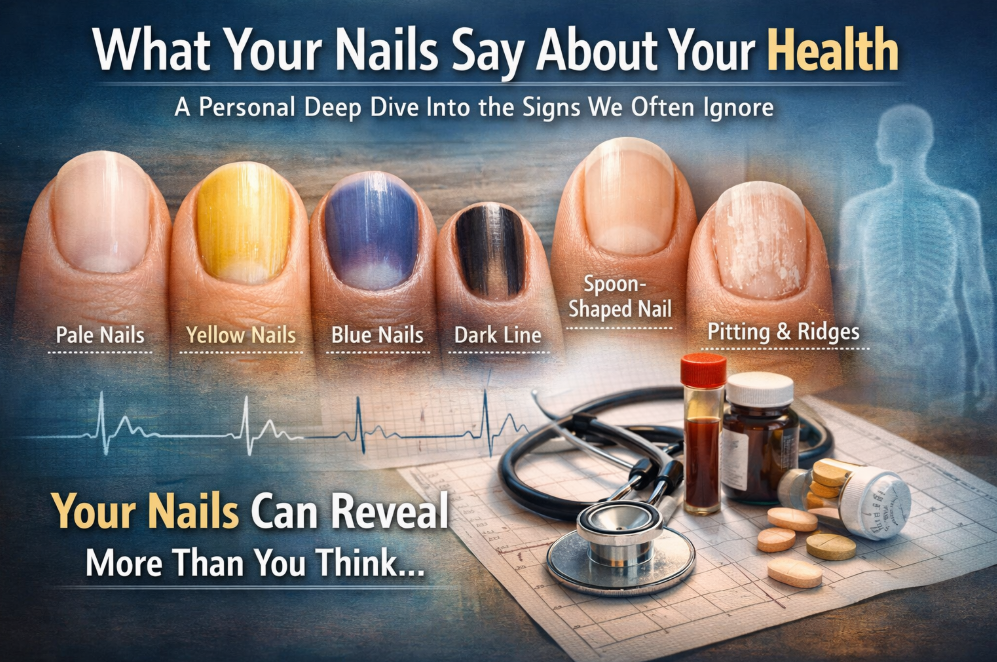
What Your Nails Say About Your Health: A Personal Deep Dive Into the Signs We Often Ignore
I used to think nails were just… nails. Something you trim, paint, or maybe bite when stressed. Like most people, I never gave them a second thought—until one day I noticed faint ridges on my thumbnails that hadn’t been there before. They weren’t painful. They weren’t dramatic. But they were new. And that curiosity sent me down a rabbit hole I didn’t expect.
What I discovered is something most doctors, dermatologists, and health educators quietly agree on: your nails can reveal more about your internal health than you might imagine. Not in a scary, WebMD-panic kind of way—but in subtle, early-warning, “your body is talking to you” kind of way.
This blog isn’t meant to diagnose you. It’s not meant to replace a doctor. It’s a first-person exploration of how nail changes can reflect nutrition, circulation, stress, systemic disease, and lifestyle—based on real medical knowledge and lived observation.
So let’s talk about nails. Not in isolation, but as part of the bigger picture of health.
Why Nails Matter More Than We Think
Nails are made primarily of keratin, the same protein found in hair and skin. What makes them special is their slow, steady growth. Fingernails grow roughly 3 millimeters per month, while toenails grow even slower.
That slow growth turns nails into a historical record of your health.
Unlike blood tests that show what’s happening right now, nails reflect what’s been happening weeks or even months ago. Nutritional deficiencies, illnesses, hormonal changes, and stress can all leave their mark.
Once I understood that, I stopped seeing nail changes as cosmetic flaws—and started seeing them as clues.
Nail Color: When Shade Tells a Story
Pale or White Nails
One of the first things I learned is that very pale nails can be linked to low hemoglobin levels, often associated with anemia. I noticed this especially in people who constantly felt tired, cold, or short of breath.
In more serious cases, nearly white nails can sometimes be associated with liver conditions or chronic illness. That doesn’t mean panic—it means pay attention.
Yellow Nails
Yellowing nails aren’t always about nail polish or aging. Persistent yellow nails can point toward:
Fungal infections
Smoking
Chronic lung conditions
Thyroid issues
What surprised me most was learning about yellow nail syndrome, a rare condition associated with respiratory and lymphatic issues. Again—rare, but real.
Blue or Purple Nails
Bluish nails usually indicate poor oxygen circulation. This can happen in cold weather, but if it’s frequent or persistent, it may be related to:
Circulatory problems
Lung disease
Heart conditions
I once noticed this after intense anxiety episodes—vasoconstriction from stress can temporarily reduce blood flow.
Dark Lines or Spots
This one deserves seriousness. A dark vertical stripe on a nail—especially one that changes shape or color—should always be evaluated. While often benign (like a mole under the nail), it can rarely indicate melanoma.
The rule I learned: don’t ignore changes that don’t grow out.
Nail Shape: Structure Reflects System Health
Clubbing (Rounded, Bulging Nails)
Clubbing happens when fingertips enlarge and nails curve downward. It develops slowly and is often painless, which makes it easy to miss.
Medically, clubbing has been associated with:
Chronic lung disease
Heart disease
Inflammatory bowel disease
What struck me is that clubbing isn’t about nails—it’s about oxygen delivery over time.
Spoon-Shaped Nails (Koilonychia)
Nails that dip inward like a spoon can sometimes be linked to iron deficiency. This was one of the most fascinating discoveries for me, because it connects something visible to a silent deficiency many people live with for years.
Thickened Nails
Thick nails are often blamed on age, but they can also reflect:
Fungal infections
Poor circulation
Diabetes
Toenails are especially revealing here.
Nail Texture: Ridges, Pitting, and Cracks
Vertical Ridges
Vertical ridges are extremely common and often harmless. As we age, our nails change texture—just like skin.
That said, very pronounced ridging may sometimes correlate with:
Nutrient absorption issues
Dehydration
Chronic stress
I noticed mine worsened during periods of poor sleep and high workload.
Horizontal Ridges (Beau’s Lines)
These lines run across the nail and usually indicate a disruption in nail growth—often due to:
Severe illness
High fever
Surgery
Major emotional stress
What makes Beau’s lines fascinating is that you can roughly estimate when the stress occurred based on where the line sits.
Nail Pitting
Small dents in the nail surface can be associated with:
Psoriasis
Autoimmune conditions
Eczema
This is one of those moments where nails act like a quiet messenger for inflammatory processes happening beneath the surface.
Nail Strength: When Brittle Isn’t Just Cosmetic
Brittle, Peeling Nails
Brittle nails are one of the most common complaints, especially in adults. While frequent handwashing and chemicals play a role, persistent brittleness may also reflect:
Low biotin levels
Thyroid imbalance
Iron deficiency
Chronic dehydration
I used to think nail supplements were marketing hype—until I realized nutrition really does show up at the tips of your fingers.
Cuticles and Nail Beds: The Often-Ignored Clues
Healthy cuticles act as a seal. When they’re constantly inflamed, torn, or receding, it can suggest:
Immune stress
Skin conditions
Nutritional gaps
Excessive chemical exposure
Redness or swelling around nail beds may even point to systemic inflammation.
Stress, Hormones, and Lifestyle: The Invisible Influencers
One of the biggest takeaways from my research is this: nails reflect lifestyle more than people think.
Chronic stress can slow nail growth. Hormonal shifts (pregnancy, menopause, thyroid disorders) can change thickness and texture. Smoking affects nail color and circulation. Poor sleep shows up subtly—but consistently.
Your nails don’t judge. They just report.
When to See a Doctor (And When Not to Panic)
Here’s a realistic, grounded rule I follow:
Temporary changes that grow out → Observe
Persistent changes that worsen → Ask a professional
Sudden changes with other symptoms → Don’t delay
Dermatologists and primary care physicians are trained to read nails as part of a full clinical picture—not in isolation.
Final Thoughts: Learning to Listen Without Obsessing
What I appreciate most about understanding nail health is that it taught me body awareness without fear. Nails aren’t fortune tellers. They’re communicators.
They remind us that health isn’t just about lab results—it’s about patterns, trends, and small signals we often overlook.
So next time you trim your nails, pause for a moment. Look closely. Not with anxiety—but with curiosity.
Your body might be telling you something worth hearing.
Disclaimer
This article is for educational purposes only and does not replace professional medical advice. Always consult a qualified healthcare provider for diagnosis or treatment.